
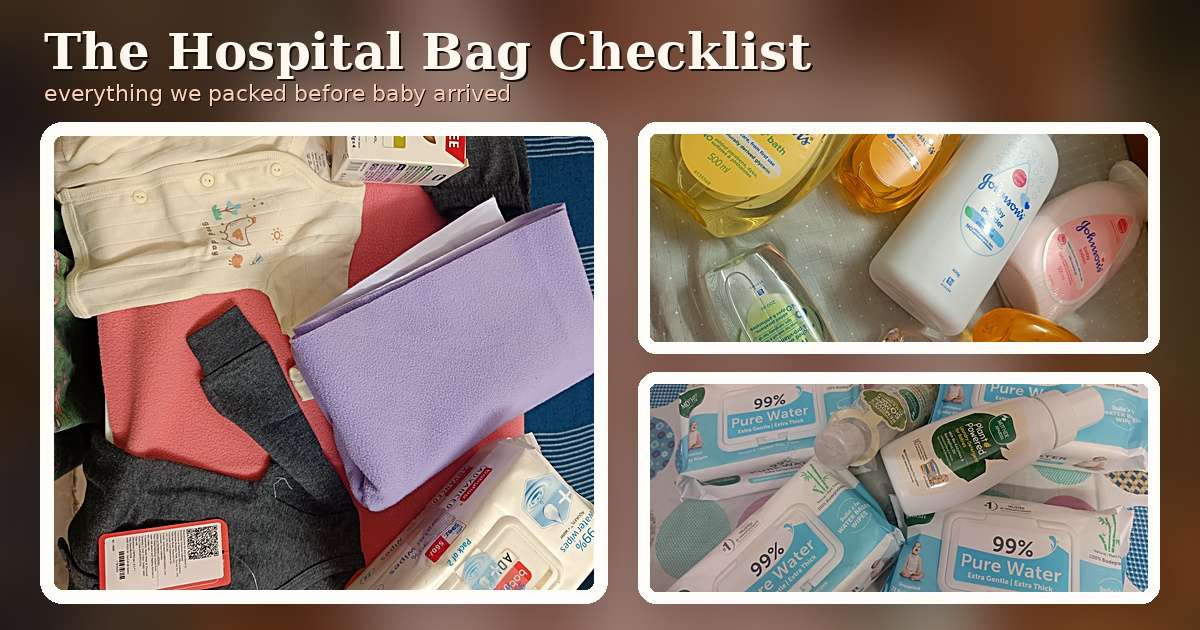
There’s a particular kind of restlessness that shows up somewhere in the third trimester. You’ve read the books, watched unlimited reels, maybe even toured the hospital, and yet there’s still this nagging feeling that you’re forgetting something. If that’s what brought you here, searching for a hospital bag checklist at some hour of the night when the rest of the house is asleep, you’re in the right place.
I’ve been exactly where you are, half-Googling and half just wanting someone to tell me I wasn’t missing anything important. So here’s the checklist I wish someone had handed me. Not a generic list copied from ten other blogs, but the actual things that earned their place in my bag, and a few that didn’t.
Quick note before we start: some links in this post are affiliate links, which means I may earn a small commission if you shop through them, at no extra cost to you. I only recommend what I actually used, or genuinely wish I’d had.
The Time I Packed “Too Early” (And Was Glad I Did)
Through my entire third trimester, I heard some version of “relax, you have time” from almost everyone. My mother, my colleagues, even my own doctor, all gently amused that I’d packed my hospital bag by week 32, taped a checklist inside my cupboard door, and knew exactly which folder held my insurance papers. I was, by every account, being a little too much about it.
Then my daughter arrived three weeks early. No warning, no time to think, only to move. My husband grabbed the bag and was out the door in under two minutes. My mother found the insurance file exactly where I’d said it would be. Nobody scrambled. Nobody drove home for a forgotten charger while I was already in labour. Every person who’d told me to relax spent the next few days thanking me instead.
I’m not sharing this to worry you. Most babies do arrive close to their due date, and if you’re reading this, chances are you still have weeks ahead of you. I’m sharing it because that quiet urge to get things sorted now isn’t anxiety. It’s instinct. Trust it.
Your Quick Hospital Bag Checklist (At a Glance)
Here’s the complete hospital bag checklist, sometimes called a labour bag or delivery bag, in one place. Skim this first, then read on for the story and reasoning behind each pick.
For Mom:
● Front-open nightgown or feeding-friendly kurta
● Nursing bra
● Maternity pads
● Toiletries in a small organizer or pouch
● Slippers, robe, and a nursing cover
● Feeding pillow (for after you’re home)
For Baby:
● Going-home outfit
● Swaddle and a few muslin cloths
● Water-based wet wipes
● Newborn (NB) size diapers
● Baby toiletries, coconut oil, and massage oil
● Cap, mittens, and a grooming kit
● Car seat
For Your Partner:
● Change of clothes
● Snacks and water
● Phone charger (or two)
● Notebook or notes app
● Something to read
Paperwork:
● ID proof and insurance documents
● Doctor’s file and prenatal reports
● Hospital admission forms
● Birth plan
What to Pack for Yourself
You’ll be sore, exhausted, and in no mood to think about how you look. This part of the hospital bag checklist for delivery is entirely about comfort.
Comfortable Clothing for Postpartum Days
A loose, front-open nightgown or kurta beats a hospital gown every time in the days after delivery. Gowns are functional, but they’re not built for comfort. My daughter happened to be a winter baby, so I spent those early weeks almost entirely indoors, living in these, layered with a woollen cardigan or a slip depending on the day. It became such an easy uniform that I stopped thinking about what to wear altogether: just grab, layer, done.
If you want something a little dressier for photos or the homecoming, The Mom Store is worth a look. For the days you’d rather just stay in and be lathered in body oil, Generic‘s combo of two kurtis covers that too.
A Nursing Bra, Even If You’re Not Sure You’ll Need One
I didn’t pack one, convinced I’d figure it out later. My nurse disagreed, firmly, and she was right. A proper nursing bra makes those first clumsy, sore, half-awake latching attempts so much easier, and saves you from constantly readjusting a regular bra while holding a new born. The Mom Store came through again on comfort and look, and I later discovered NYKD for maternity wear and stuck with it.
Maternity Pads
My hospital didn’t provide any, and I was glad I’d stocked up myself. EverEve came recommended by my cousin, who swore by them, and they worked just as well for me. I still have a few leftover packs I haven’t quite worked up the nerve to use again, if you know, you know.
Your Own Toiletries
Pack your toothbrush, your lip balm, whatever skincare you’ve already been using at home. If you spent months researching safe, gentle products for pregnancy, there’s no reason to switch now, your skin still needs that same care, arguably more. There’s also something quietly grounding about familiar smells in an unfamiliar hospital room.
Keep it all together in a small organizer or pouch rather than loose in your bag. You’ll still be moving slowly those first days, and you’ll want your partner, your mother, or even the nurse to be able to find what you need and hand it over without you having to dig through everything yourself.
Slippers, a Robe, and a Feeding Pillow
A pair of soft, slip-on slippers will get you through the hospital corridor walks the staff will insist on. A robe or shawl is worth having for the early days of visitors and photos, and I never went without a nursing cover, something I used from day one straight through my entire feeding journey. A feeding pillow wasn’t something I managed to bring to the hospital itself, but it became genuinely useful once we were home, worth packing if you have the room.
What to Pack for Your Baby
This is the part every new parent obsesses over, understandably, but these newborn hospital bag essentials really don’t need to be complicated.
The Going-Home Outfit
One soft, weather-appropriate outfit is genuinely all you need. Most hospitals provide the basics for the days in between.
Swaddles and Muslin Cloths
A good swaddle does double duty. Babies tend to settle better when they feel snugly held, and this is often the piece of cloth that ends up in your baby’s very first photographs. I spent more time than I’d like to admit hunting for ones that were soft, comfortable, and actually pretty. NINTARABABY and Mom’s Home were my favorites.
Naturally, the one photo that matters most, my daughter’s very first, tongue sticking out and all, has her wrapped in the most basic blanket in the house, because someone grabbed whatever was closest in the moment. It’s still one of my favorite pictures, even if I do wish it had been one of the prettier ones I’d picked out.
Muslin cloths deserve their own mention. You cannot own too many. I started with two packs of six in every size and still managed to lose them constantly, tucked into random bags, left at the pediatrician’s office, one still probably living in my car somewhere. You’ll be restocking well past the newborn stage, so don’t feel like you’re overbuying. Burp cloths, wash cloth napkins, bath towels, and large bath towels all fall into this category.
Wipes and Diapers
Water-based wet wipes are essential from day one. I did try Johnson’s Baby wipes at one point, they smell lovely, but the fragrance wasn’t something I felt comfortable using on her skin that often, so I went back to fragrance-free ones for daily use.
Diapers are where I made my one real mistake. Unsure of sizing, I bought a size “S”, which turned out far too big for my particularly petite newborn. Go for “NB” (New Born) instead, and feel free to experiment with brands from there. Pampers is a solid place to start.
Baby Toiletries and Massage Oils
You’ll need to bathe your baby once the umbilical cord falls off, and Aveeno is the brand I trusted most to start that journey. We used it consistently with zero allergic reactions.
Cold-pressed coconut oil is something I still reach for today, honestly, not just in the newborn months. It’s my go-to for diaper rash and just about any skin issue that comes up. I sourced it locally.
For massage, we used almond oil. Since she was a winter baby, a warm oil massage became part of our daily routine, and it worked beautifully on her skin. If I can consume it, it is safe for my baby’s skin.
Staying Warm and Comfortable
A cap and mittens set is worth having, hospitals run colder than you’d expect. A grooming kit will get used sooner than you think, and a rattle is a nice thing to have on hand early on too. If mosquitoes are a concern where you live, a portable baby bedding set with a mosquito net is genuinely useful, ours came in handy almost immediately.
The Car Seat
Non-negotiable, most hospitals won’t let you leave without one. Just make sure whatever car seat you choose meets the safety standards in your country.
What to Pack for Your Partner
This bag gets forgotten until 3am, when someone’s starving and the cafeteria’s closed. Mine, to be fair, never forgot the important things, though I do have one complaint. The morning after I delivered, sore, exhausted, barely able to sit up, I looked over to find my husband calmly reading a book in the hospital room. Mildly infuriating in the moment, admittedly. But looking back, he had actually packed smart, clothes, chargers, toiletries, and yes, that book, so at least the essentials were covered while I recovered.
● A change of clothes, they’ll be there longer than they planned.
● Snacks and a water bottle, hospital cafeterias close at the worst times.
● Phone charger, and a second one, you will not believe how much this gets used for photos and updates to family.
● A small notebook or notes app, for jotting down feeding times and doctor instructions you will absolutely not remember later.
● Something to read, for the quiet moments in between.
The Paperwork That Actually Saved Me
Not glamorous, but this folder is what kept me from real panic.
● ID proof and insurance documents
● Doctor’s file and prenatal reports
● Hospital admission forms, if they can be filled in ahead of time
● A simple, one-page birth plan, if you have preferences
Keep it all in one place, and make sure your partner knows exactly where that is. This was the one thing I was smug about being organized for, and the one that mattered most in the rush.
Diaper Bag & Travel Backpack
Here’s a small thing that ended up mattering more than I expected: the diaper bag itself.
I picked a duffel-style bag mostly because I wanted something that matched the rest of my baby’s things, and honestly, growing up, I’d always carried a duffel bag myself, so it felt like a natural choice. It turned out to be a great call for the newborn months. It had a ton of space and a wide opening, so I could actually see and sort through everything inside instead of digging around blind, which matters a lot more than you’d think when you’re trying to find one specific thing one-handed. Duffel Bag
Where it fell short was travel. Duffel bags aren’t built for the kind of hands-free, on-the-move packing that trips need, so I ended up getting a proper backpack style diaper bag for that instead, easier on the shoulders, easier to grab things from while moving through an airport or in and out of a car. Backpack
So my honest suggestion: if you’re mostly going to be at home or on short outings in the early months, a roomy duffel style bag works beautifully. But if travel is on the cards anytime soon, it’s worth having a backpack version too, rather than trying to make one bag do both jobs.
What I’d Leave Out Next Time
In the interest of honesty: I packed a full skincare routine I never touched, a book I never opened, and three going-home outfits for a baby who wore exactly one. Pack light on the extras and heavy on the essentials. You’ll have very little bandwidth for anything beyond feeding, resting, and staring at this new tiny person.
Frequently Asked Questions
What should I pack in my hospital bag for delivery?
At minimum, comfortable nursing-friendly clothing, a nursing bra, maternity pads, your own toiletries, and a robe for yourself. For the baby, a going-home outfit, a swaddle, a few muslin cloths, and newborn-size diapers. Keep your paperwork, ID, insurance, and prenatal reports, together in one folder you can hand over quickly.
When should I pack my hospital bag?
Most doctors recommend having it ready by the start of your third trimester, around week 32 to 34. Babies don’t always stick to the due date. Mine arrived three weeks early, so it’s worth packing earlier than you think you need to.
Does the hospital provide diapers and wipes for the baby?
Most hospitals provide a small starter supply, but it’s not guaranteed to be enough or in the right size. It’s safer to carry your own newborn-size diapers and a pack of water-based wipes just in case.
What size diapers should I pack for a newborn?
Pack “NB” (New Born) rather than “S”. Newborns are often smaller than expected, and a size S can be too loose to be effective in the first couple of weeks.
Do I need to bring my own maternity pads?
It’s a good idea to carry your own, since hospitals don’t always provide enough for your personal preference or comfort level, especially for the heavier first days after delivery.
What should my partner pack for the hospital?
A change of clothes, snacks and water, a phone charger (or two), and something to keep them occupied during the quieter stretches. It’s easy to focus entirely on the mother and baby’s bag and forget this one, but your partner will likely be there far longer than planned.
Before You Go
If there’s one thing worth taking from all of this, it isn’t the checklist, it’s this: however many weeks you have left, however “on time” your due date feels, there’s no downside to being ready early. Nobody has ever regretted packing their bag too soon. Pack it, zip it, set it by the door, and go back to enjoying these last quiet weeks. You’re not being anxious. You’re already someone’s mother.